Sector continues to promote investment, formal employment, and productive linkages.
The VIII Free Trade Zone Congress brought together more than 400 business leaders, government officials, and national and international experts this week at the National Convention Center to discuss the present and future of the Free Trade Zone Regime and its impact on the country’s economic and social development.
Keynote addresses and specialized panels addressed topics such as the advancement of artificial intelligence, new geopolitics, human talent development, energy sustainability, and the sector’s regulatory challenges.
The forum, organized by the Association of Free Trade Zone Companies of Costa Rica (AZOFRAS), offered a platform for high-level dialogue and the convergence of ideas, experiences, and visions that will contribute to shaping strategic decisions for the future of the regime and boosting the country’s competitiveness.
Ronald Lachner, president of AZOFRAS, emphasized that this year’s congress provides an understanding of how free trade zones have evolved worldwide and how Costa Rica can continue to strategically position itself in this global environment.
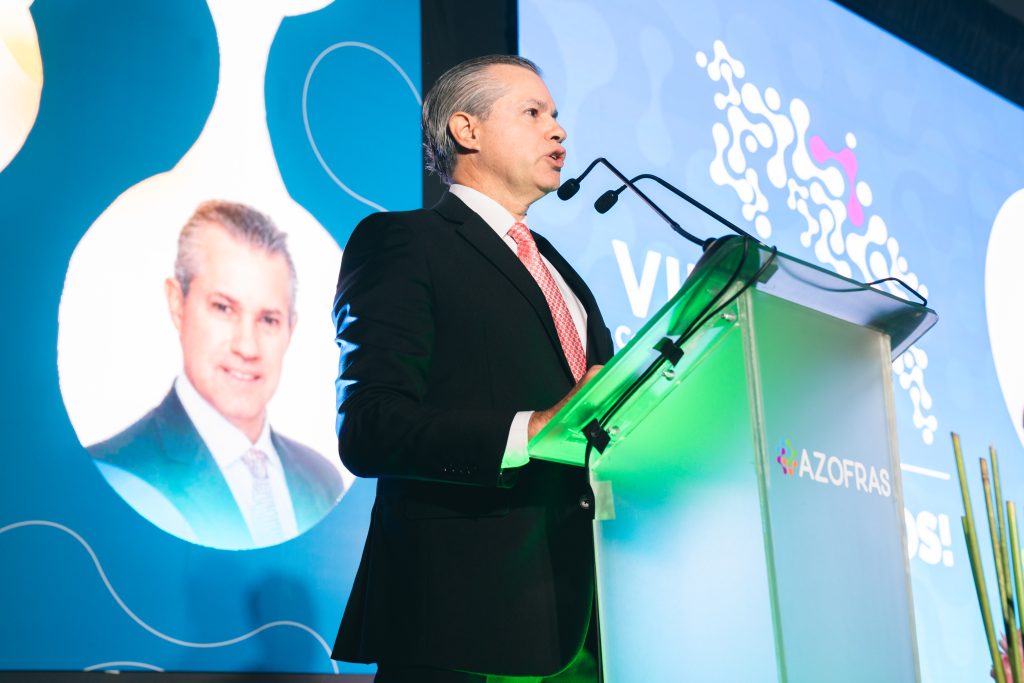
“The discussions taking place today are critical to charting the roadmap that will allow us to remain relevant and relevant internationally.”
Lachner called for unity. “Only by working together in a coordinated manner between the public and private sectors, academia, and civil society, will it be possible to build a more prosperous and sustainable future for all people. We must redouble our efforts and work together to continue positioning our country as an attractive, innovative, and competitive investment destination.”
The Minister of Foreign Trade, Manuel Tovar, emphasized that despite the international context, this sector continues to drive investment, formal employment, and productive linkages:
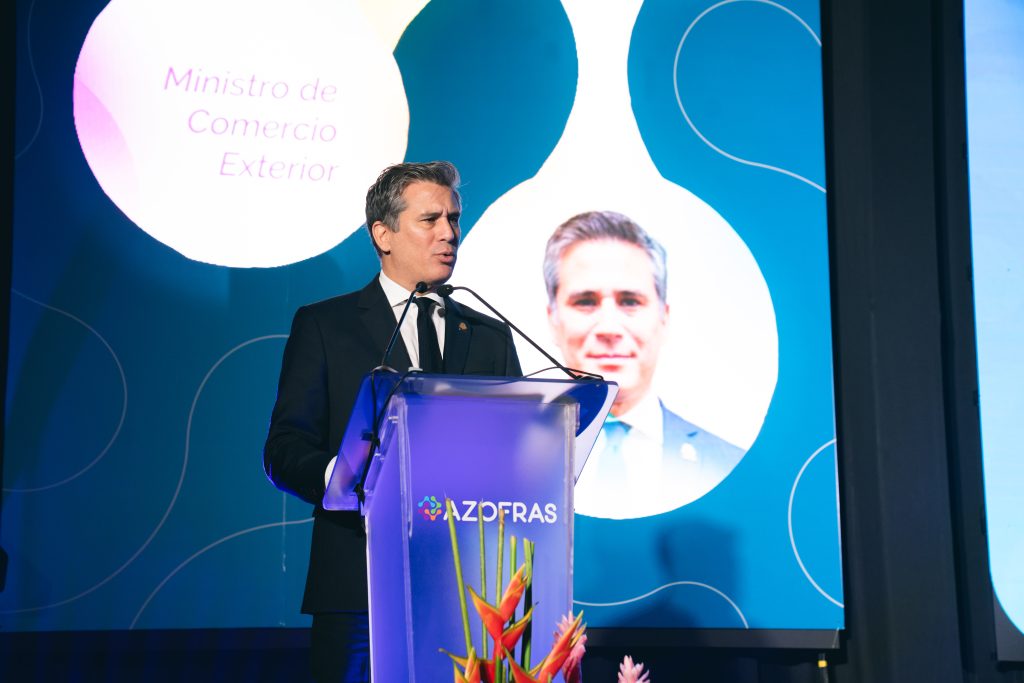
“The free trade zone regime drives a significant portion of Costa Rica’s economic development, generating more than 265,000 direct and indirect jobs , many of them held by women and young people. Their dynamism is reflected in the fact that they account for a large portion of our exports, contributing nearly 15% of Costa Rica’s GDP .”
The minister added that this government remains committed to continuing to work with a clear and decisive focus to strengthen competitiveness and improve our business climate.
For her part, Laura López, General Manager of PROCOMER, commented that it is very important to promote spaces like this Congress, where key issues for the country are highlighted. “By 2024, the Free Trade Zone Regime accounted for 74% of Costa Rica’s Foreign Direct Investment (FDI) , channeling more than $3.7 billion. Furthermore, FTZ companies contribute to the diversification of exports, which reached $13.013 billion under this model last year, and generate jobs for approximately 200,000 Costa Rican families. These figures demonstrate the strategic role of the Regime in the country’s economic development.”
AI, employability and megatrends
One of the highlights of the 8th Congress was the accelerated implementation of Artificial Intelligence and its impact on the transformation of various sectors.
Another focus was on employability 4.0 and how to enhance it through a strategic combination of soft skills, technical competencies, and STEAM educational models.
In addition, the megatrends that will define the future of FDI were discussed , recognizing that the country must act with strategic intelligence to strengthen its position in the face of growing regional and international competition.
The Free Trade Zone Regime, comprised of 626 companies from diverse sectors , is positioned as the main driver of economic growth in Costa Rica, generating 265,571 direct and indirect jobs; $6.014 billion in local purchases; and $1.9 billion in social security and non-tax contributions.
In addition, it impacts with an absolute contribution to national production of $13,893 (15% of the Gross Domestic Product) and contributes to the diversification of exports, which reached US$13,013 million during 2024.


0 Comments